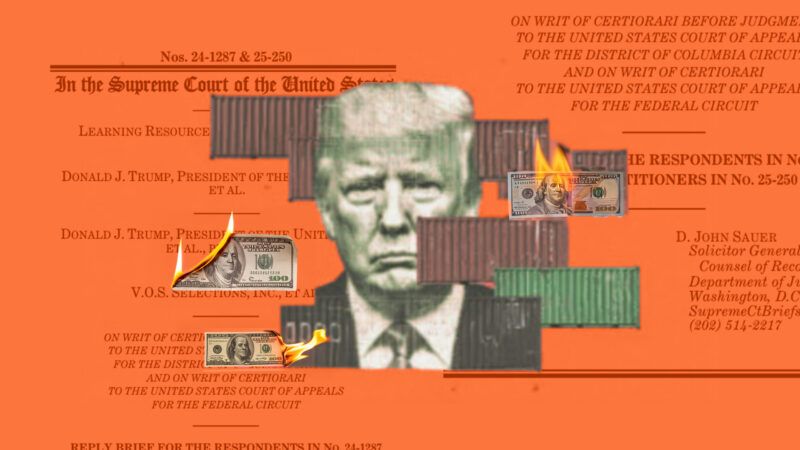
In a 6-3 ruling, the Supreme Court held that The Fascist Felon does not have the authority to impose tariffs under a 1977 law called the International Emergency Economic Powers Act (IEEPA).
The decision does not affect all of Trump’s tariffs, leaving in place ones he imposed on steel and aluminum using different laws, for example. But it upends his tariffs in two categories. One is country-by-country or “reciprocal” tariffs, which range from 34% for China to a 10% baseline for the rest of the world. The other is a 25% tariff Trump imposed on some goods from Canada, China and Mexico for what the administration said was their failure to curb the flow of fentanyl.
Trump could seek to reimpose the tariffs, using other laws.
The Constitution says the power to set tariffs is assigned to Congress.
