
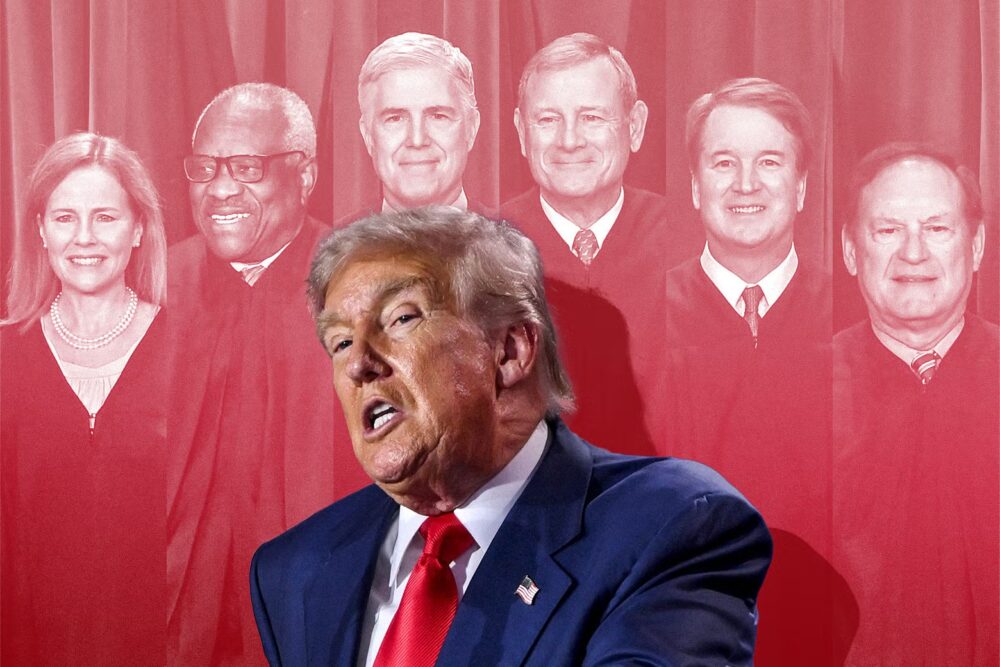
A 6-3 decision by SCOTUS on Friday cleared the way for the Trump administration to move forward with a centralized verification system to check voters’ citizenship, after lower courts ruled that the Trump administration’s changes to the database were likely unlawful.
The conservative majority ruled that a lower-court ruling that had blocked the Trump administration from rolling out the system was improper because it inhibited “the federal government’s efforts to assist state and local agencies in the proper administration of the midterm elections.”
The Extreme Court noted in its unsigned ruling that the National Voter Registration Act bars the broad purging of voter rolls in the weeks leading up to an election, which “limits the potential impact” of the decision this year.
Individual states will be allowed to utilize the federal system, but it’s unclear how much enthusiasm there will be in local and state elections to use it — as there have been examples of mistakes in the system flagging US citizens as noncitizens.
Justice Ketanji Brown Jackson wrote the dissenting opinion.
“The harm caused by burdening or disenfranchising even a few lawful voters outweighs the nonexistent harm that the government experiences when it is prevented from taking an action that it likely lacks the authority to take,” she wrote, joined by Justices Sonia Sotomayor and Elena Kagan.
The Systematic Alien Verification for Entitlements program, known as SAVE, was set up by Congress in 1986 so that government agencies could quickly determine someone’s immigration status when they applied for benefits like Social Security.
Trump signed an executive order in March that would expand the SAVE act, requiring voter citizenship verification. The Trump administration expanded the order by adding information from the Social Security Administration, allowing officials to perform bulk searches.